
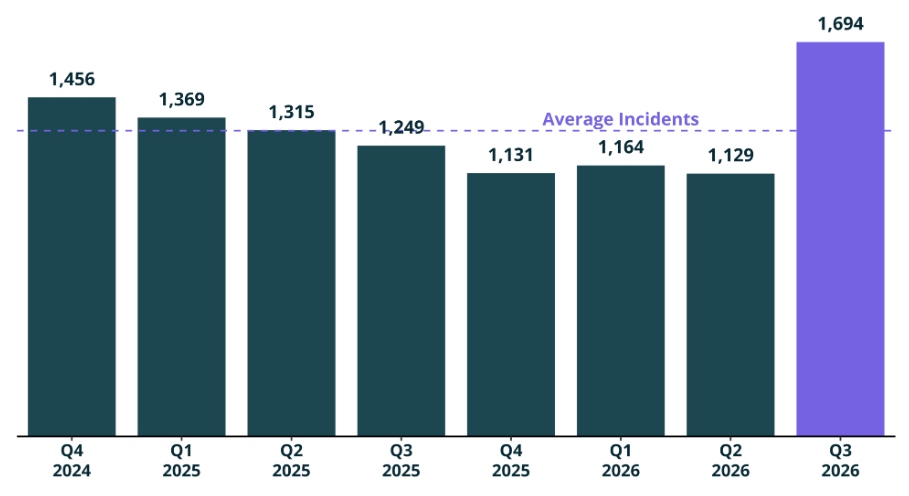
Cyber security incidents recorded by the NCSC in the third quarter of 2026 increased significantly compared to the previous quarter. Between July and September 2026, the NCSC responded to 1,694 incident reports, compared to the 1,129 reports in the second quarter of 2026, an increase of 50%, and the highest number of reports since Q3 2024.
Of these, 179 incidents were triaged for specialist technical support due to their potential national significance, a 94% increase from the previous quarter (92 incidents). The other 1,515 reports did not require specialist technical support.
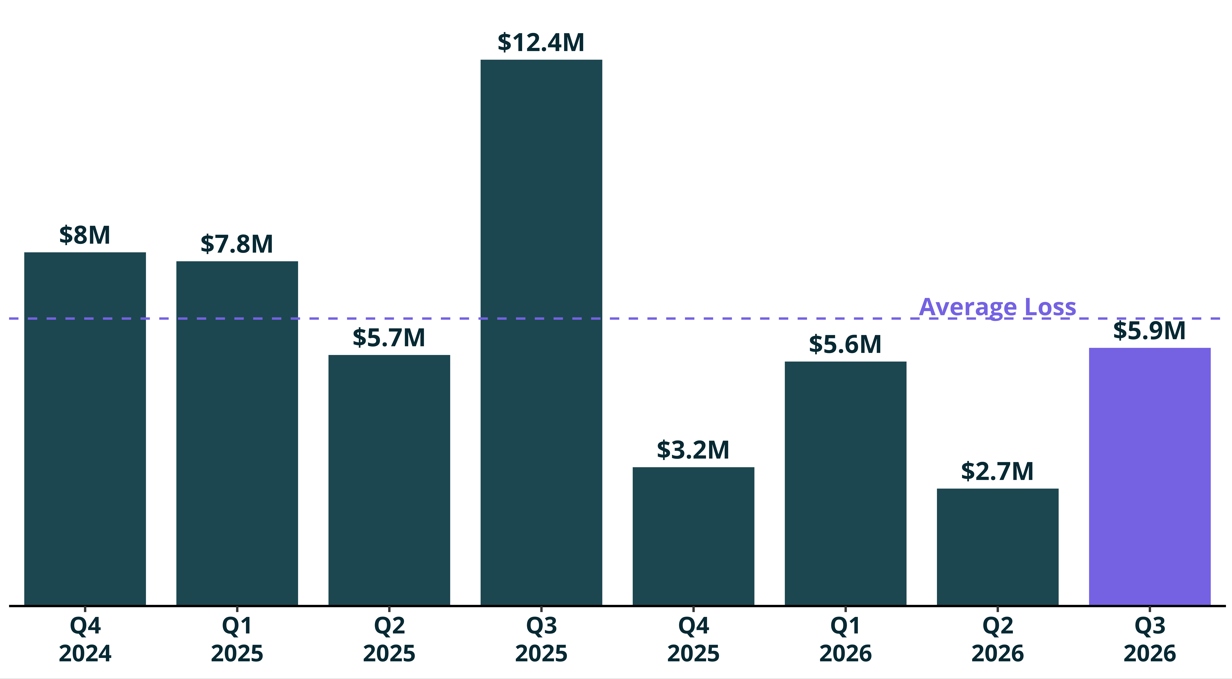
Direct financial loss reported during Q3 also saw a significant increase, totaling $5.9 million, a 118% increase compared to the previous quarter’s $2.7 million.
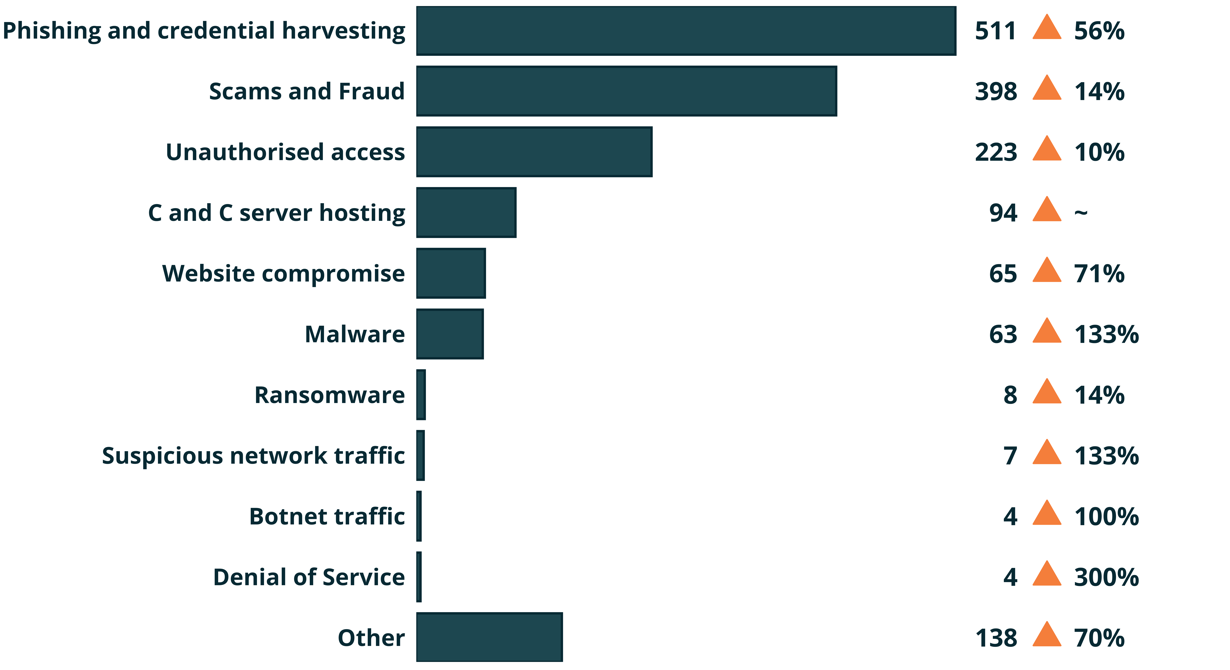
Phishing and credential harvesting once again returned to the top spot as the most common category of incident reported, showing an increase of 56% (511 incidents) followed by scams and fraud.
Due to the emergence of Frontier AI, the landscape of cyber security is entering a new era where vulnerabilities can be found and exploited at an increased scale and speed. There are more vulnerabilities being identified than ever before. The first article highlights what organisations are and should be doing to keep themselves protected, along with a look at the NCSC’s vulnerability alert process.
Cyber attacks on operational technology have been hitting the news recently. The second article provides some insight on what operational technology is, examples of recent attacks, and how it can be protected.
Read article: Navigating the new vulnerability landscape
Read article: The real-world impact of operational technology cyber attacks
The NCSC endeavours to provide the richest possible view of the data available. Where possible, our statistical categories include all incidents. However, due to the way information is collected and processed, for some categories it is not possible for us to include incidents triaged for specialist technical support.
Data highlights
The NCSC responded to 179 incidents with potential to cause national harm. This is a 94% increase from 92 incidents in Q2 2026.
1,515 incidents did not require specialist technical support in Q3, up 46% from Q2 2026.
$5.9 million in direct financial loss was reported in Q3 2026, a 118% increase from the previous quarter’s $2.7 million.
Phishing and credential harvesting was the most common incident category this quarter with 511 incidents.
C and C server hosting incidents were reported this quarter for the first time since Q3 2025 and were significantly higher at 94 reported incidents.
If you are interested in more data, read our Data Landscape section. This provides a standardised set of results, graphs, and an analysis of the latest trends.
Data Landscape: a closer look at our numbers
Number of incidents
A total of 1,694 incidents were recorded by the NCSC in Q3.
Breakdown by incident category
Direct financial loss
There were 339 incidents reported to the NCSC during Q3 2026 that reported a direct financial loss.
Direct financial losses totaled $5.9 million in Q3 2026, increasing by 118% compared to last quarter.
Incident severity
Of the total reports received:
- 1 was categorised as C2 – a highly significant incident
- 12 were categorised as C3 – significant incidents
- 53 were categorised as C4 – moderate incidents
- 73 were categorised as C5 – routine incidents
- 1267 were categorised as C6 - minor incidents
- Remaining incidents were not categorised.
There were no C1 – national cyber emergencies this quarter.
Incidents by suspected actors
Where possible, the NCSC links incidents triaged for specialist support to a known actor or activity grouping. Of the 179 such incidents handled by the NCSC in Q3 2026:
- 31% were assessed to be likely linked to state-sponsored actors,
- 26% were assessed to be likely linked to cybercrime actors, and
- 43% did not have enough evidence to link the activity to a known malicious cyber actor.